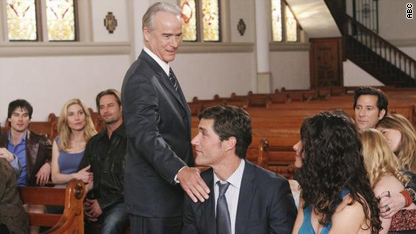
The television show LOST has captured the interest of many viewers over the past six years. The series finale, which aired on May 23rd, has polarized fans. The Sunday school class I teach at Crooked Creek Baptist Church hasn't focused specifically on LOST (yet!). But we certainly have focused on issues which have polarized Christians every bit as much as the LOST finale has polarized fans. And some of those topics are ones that LOST itself has explored: the meaning of existence, the nature of good and evil, the relationship of Christianity to other religions, and the afterlife.
I thus thought it appropriate to post on this topic, both to invite LOST fans in the Indianapolis area to a church that makes room for those sorts of conversations, and to share with friends at church (as well as anyone else who is interested) links to things I have written and interviews in which I am quoted commenting about LOST.
USA Today: "God, the Devil and TV's 'Lost'"
MTV News: "'Lost' Finale: Experts Talk Impact Of Religion On The Island."
E! Online: "Can the Lost Finale Satisfy the Fans?"
Journal Sentinel: "To The End, Fans Lost in TV's 'Lost'" and "Lost Theories Revealed"
I have also blogged extensively about LOST for the past several years on my own personal blog, Exploring Our Matrix.
Whether you are a LOST fan or not, Crooked Creek Baptist Church welcomes you to join us for worship, and for conversation about interesting and important topics!
Showing posts with label When Christians Disagree. Show all posts
Wednesday, May 26, 2010
Sunday, October 19, 2008
Church and State
Today in Dr. McGrath's class we finished our introductory topic on the Bible in the "When Christians Disagree" series. We looked at the example of circumcision, which in Genesis 17 is quite plainly said to be a permanent and absolute condition of membership in the covenant people, even for those not actually descended from Abraham. We then turned to Acts 15 and looked at how the church (or at least part of the church) decided that it was going to do something different than what a plain reading of Genesis 17 would require. Reading Acts and Paul's letters as Scripture, it can be hard for Christians to put themselves in the situation of the time in which they were written, when these texts were not yet Scripture, and were making the case for something that seemed to many to represent a departure from Scripture.
In Acts 15, as also in Galatians, the argument seems to allow experience to trump Scripture. God had shown acceptance of Gentiles by pouring out the Holy Spirit on them while uncircumcised. If God had accepted them in this way, who are we to impose other requirements upon them? To get a sense of how this argument seemed to many Jewish Christians in the first century, one may usefully compare the topic of homosexuality, in connection with which many today might make a similar argument...
As we turn to various topics on which Christians disagree, there are other factors beside the Bible that we'll need to consider, such as reason, tradition, and experience. The Bible can of course be thought of in different ways: as a source of writings which are authoritative on Christian doctrine and practice, or as a source or writings which allow us to see examples of how the earliest Church worked through issues, themselves making use of Scripture, reason, tradition and experience.
Congress shall make no law respecting an establishment of religion, or prohibiting the free exercise thereof; or abridging the freedom of speech, or of the press; or the right of the people peaceably to assemble, and to petition the government for a redress of grievances.
Tuesday, August 12, 2008
Comparing views of the Bible
In preparation for our first main topic in the "When Christians Disagree" series, I've posted some links reflecting different views of and approaches to the Bible among Christians. Hopefully those who are planning to attend will manage to at least glance at one short article from each category - just pick one at random, since it will be more interesting if different people have read different things!
Progressive/Liberal Christian
Borg, Marcus
Dodd, C. H., The Bible Today
Common Sense Christianity: "The Bible"
Moderate Christian
Keck, Leander E., Taking the Bible Seriously
Bruggeman, Walter, "Biblical Authority"
Placher, William C., "Is the Bible True?"
Sanders, James A., "The Bible as Canon"
Taylor, Barbara Brown, "Caution: Bible Class in Session"
Noyce, Gaylord, "Bible Stories, Literalists and the Sunday School"
Hyers, Conrad, "Biblical Literalism"
Dayton, Donald W., "The Battle for the Bible"
Goodspeed, Edgar J., The Story of the New Testament
Fosdick, Harry Emerson, A Guide to Understanding the Bible
Davis & Hays, "Learning to Read the Bible Again"
Hays, Richard B., "Salvation by Trust"
Wink, Walter, "How I Have Been Snagged by the Seat of My Pants While Reading the Bible"
Newsom, Carol, "Probing Scripture"
Worden, Ronald D., "Taking the Bible on its Own Terms"
Christian Bible Reference Site: "What is the Bible?"; "How To Study the Bible
Conservative Christian
Bruce, F. F.
Noll, Mark A., "Battle for the Bible"
Boa, Kenneth, "Is the Bible Trustworthy?"
Keathley, J. Hampton, "The Holy Canon of Scripture"
Packer, James I., "In Quest of Canonical Interpretation"
Dryness, William A., "How Does The Bible Function in the Christian Life?"
Christian Apologetics and Research Ministry, "The Bible"
Don Carson mp3s (including two on the reliability of the New Testament)
Posts on inerrancy at Parchment and Pen blog
It was impossible to read all articles on even the above mentioned sites, and thus the characterization of the theological outlook of each may be imprecise or inaccurate. The categorizations are themselves problematic, since we are dealing with a spectrum of views rather than watertight categories.
I have also made available scans of excerpts from two books. The first represents an American Baptist moderate, with replies from a conservative and a liberal. The second is an excerpt from Keith Ward's book What the Bible Really Teaches which I found helpful. There is also a two part piece by Rudolf Bultmann on the Gospel message (Greek kerygma) and myth (i.e. a pre-scientific understanding of the world), which is part of a larger conversation on the subject, and which helpfully brings into focus the issues of the cultural and historical background of the Bible in relation to readers in our time. You may also want to take a look at some web materials I've created, including an interactive Bible textbook and a page entitled "Is the Bible true?"
Progressive/Liberal Christian
Borg, Marcus
- Audio and video interviews
- Reclaiming the Bible
- The Bible, literalism and the truth of Christianity
- Review of Reading the Bible Again for the First Time
Dodd, C. H., The Bible Today
Common Sense Christianity: "The Bible"
Moderate Christian
Keck, Leander E., Taking the Bible Seriously
Bruggeman, Walter, "Biblical Authority"
Placher, William C., "Is the Bible True?"
Sanders, James A., "The Bible as Canon"
Taylor, Barbara Brown, "Caution: Bible Class in Session"
Noyce, Gaylord, "Bible Stories, Literalists and the Sunday School"
Hyers, Conrad, "Biblical Literalism"
Dayton, Donald W., "The Battle for the Bible"
Goodspeed, Edgar J., The Story of the New Testament
Fosdick, Harry Emerson, A Guide to Understanding the Bible
Davis & Hays, "Learning to Read the Bible Again"
Hays, Richard B., "Salvation by Trust"
Wink, Walter, "How I Have Been Snagged by the Seat of My Pants While Reading the Bible"
Newsom, Carol, "Probing Scripture"
Worden, Ronald D., "Taking the Bible on its Own Terms"
Christian Bible Reference Site: "What is the Bible?"; "How To Study the Bible
Conservative Christian
Bruce, F. F.
- "The Canon of the New Testament" (also here)
- "The Canon of Scripture"
- "Faith vs. Scientific Study of the Bible"
Noll, Mark A., "Battle for the Bible"
Boa, Kenneth, "Is the Bible Trustworthy?"
Keathley, J. Hampton, "The Holy Canon of Scripture"
Packer, James I., "In Quest of Canonical Interpretation"
Dryness, William A., "How Does The Bible Function in the Christian Life?"
Christian Apologetics and Research Ministry, "The Bible"
Don Carson mp3s (including two on the reliability of the New Testament)
Posts on inerrancy at Parchment and Pen blog
It was impossible to read all articles on even the above mentioned sites, and thus the characterization of the theological outlook of each may be imprecise or inaccurate. The categorizations are themselves problematic, since we are dealing with a spectrum of views rather than watertight categories.
I have also made available scans of excerpts from two books. The first represents an American Baptist moderate, with replies from a conservative and a liberal. The second is an excerpt from Keith Ward's book What the Bible Really Teaches which I found helpful. There is also a two part piece by Rudolf Bultmann on the Gospel message (Greek kerygma) and myth (i.e. a pre-scientific understanding of the world), which is part of a larger conversation on the subject, and which helpfully brings into focus the issues of the cultural and historical background of the Bible in relation to readers in our time. You may also want to take a look at some web materials I've created, including an interactive Bible textbook and a page entitled "Is the Bible true?"
Subscribe to:
Posts (Atom)